
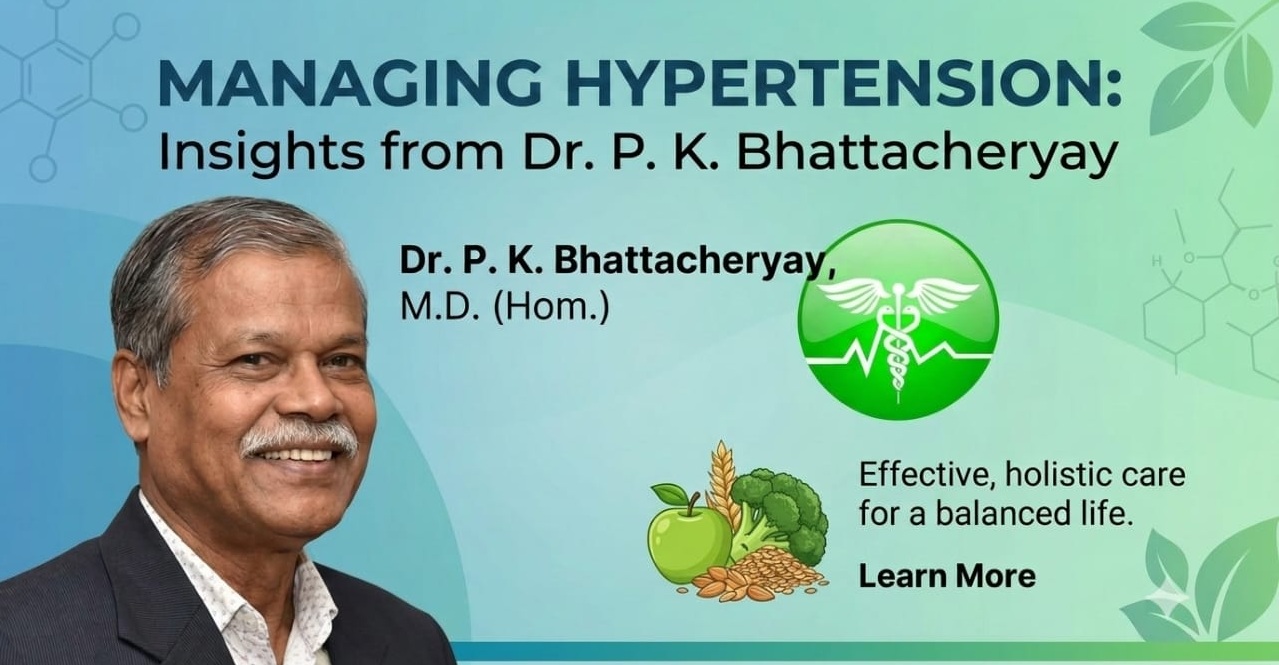
Understanding Hypertension: Causes, Symptoms & Management
Hypertension is often called the "silent killer" — it gradually damages the body for years before causing noticeable symptoms. Left uncontrolled, it is a major risk factor for heart attack, stroke, and kidney disease, but with the right approach it can be effectively managed.
The Hypertension Burden
Uncontrolled high blood pressure serves as a major risk factor for heart attack, stroke, and nephropathy (kidney disease). The major factors responsible for this prevalence are stress, increased sodium intake, physical inactivity, and alcohol consumption.
The Homoeopathic Approach
The homoeopathic approach to managing hypertension, combined with auxiliary strategies, offers a holistic perspective that considers the individual's physical, emotional, and lifestyle factors. This integrative approach aims not only to address symptoms but also to promote overall well-being on the journey toward maintaining optimal blood pressure levels.
Measuring Blood Pressure Intensity
Blood pressure is best measured with a mercury sphygmomanometer — digital or dial instruments do not provide accurate measurements. Certain levels of the condition are set depending on the person's reading:
Normal — 130/85
Within the normal blood pressure range.
High Normal — 130–140/85–90
Slightly elevated; worth monitoring closely.
Mild Hypertension — 140–160/90–100
Early-stage hypertension.
Moderate Hypertension — 160–180/100–110
Requires closer medical attention.
Severe Hypertension — 180–210/110–120
Significant risk to vital organs.
Very Severe Hypertension — >210/120
Requires urgent medical intervention.
Prevention & Management
- 01 Eat healthy: follow the DASH diet rich in fruits, vegetables, and whole grains; avoid processed and packaged food
- 02 Cut salt: limit daily sodium intake to under 2,300 mg (ideal is 1,500 mg)
- 03 Exercise daily: get at least 150 minutes of moderate aerobic activity each week
- 04 Lose weight: maintain a healthy body weight to ease pressure on arteries
- 05 Limit alcohol: restrict intake to standard moderate levels or abstain completely
- 06 Quit smoking: avoid tobacco to prevent arterial damage
- 07 Monitor blood pressure regularly, even at home
- 08 Practice stress management: deep breathing or meditation
- 09 Schedule regular heart checkups, especially after age 40
Key Contributing Factors
A high burden of hypertension-related complications affects nearly one out of every two patients. Key contributing factors include family history of hypertension, a sedentary lifestyle, life stress, and non-adherence to antihypertensive medications — underscoring the need for patient education, physical activity, and routine screening for high-risk individuals.
Chances of Recovery Depend On
- 01 Duration of disease — the higher the duration, the more difficult the outcome; earlier treatment gives a much higher chance of cure
- 02 Control of hypertension — well-controlled and partially controlled cases are more hopeful than uncontrolled cases despite regular medication
- 03 Fluctuating pressure — frequent swings between very high and very low readings are always alarming
- 04 High diastolic pressure — high systolic alone is less dangerous than high or disproportionate diastolic pressure
- 05 Complications — cases involving heart, kidney, eyesight, or nerve symptoms are more difficult to reverse
- 06 Strict diet control and regular exercise significantly help in curing this stubborn condition
Our Homoeopathic Treatment Approach
At our clinic, every patient receives a personalised consultation. Treatment begins with a detailed evaluation of the patient's condition, disease stage, lifestyle factors, and medical history — with the objective of clearly defining diagnosis and prognosis, and building an individualised plan of care and lifestyle changes.
Allopathy with Homeopathy
Some conditions benefit from a combined approach using both allopathy (conventional medicine) and homeopathy. Under our supervision, we aim for a gradual transition, where possible, to reduce dependency on long-term conventional medications while maintaining patient safety and disease control. Based on the patient's response, the dosage and frequency of allopathic medicines may be reduced over time.