
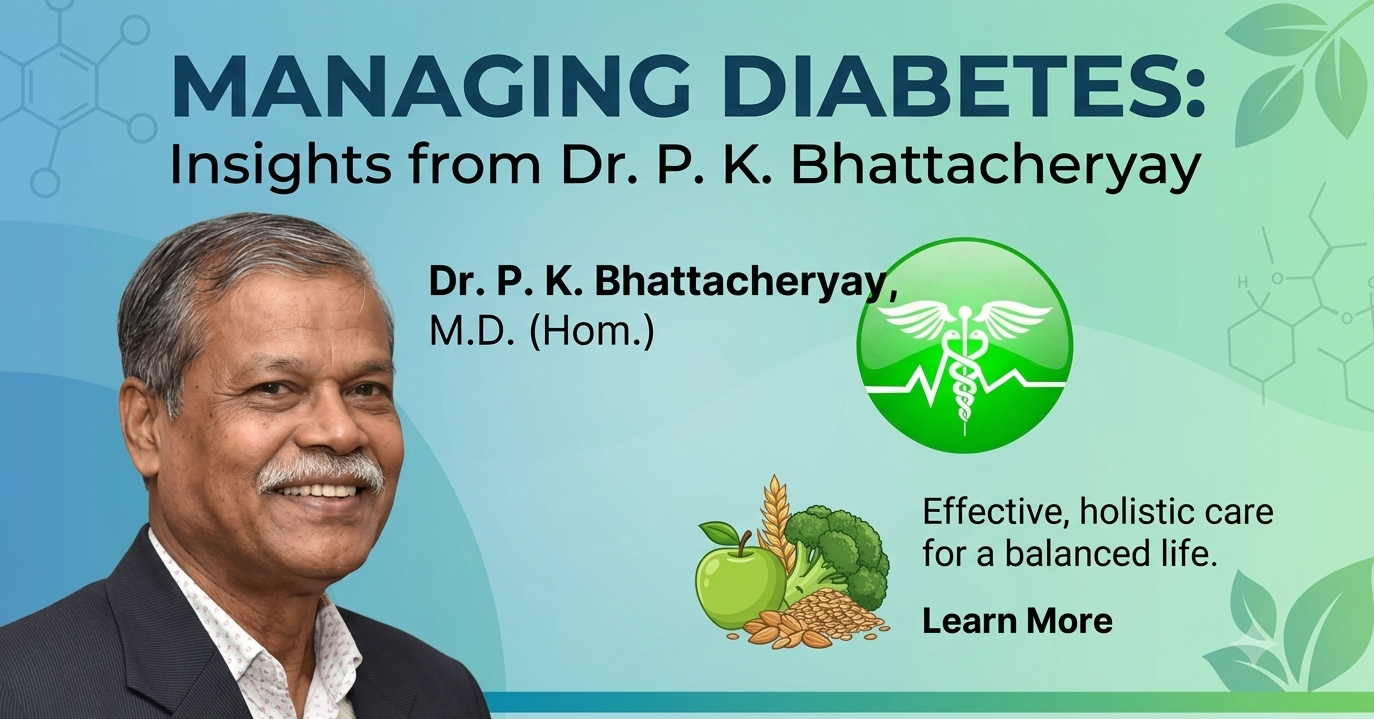
Understanding Diabetes: Causes, Symptoms & Management
Diabetes is a worldwide disease that, if not attended to properly, leads to serious complications. Left uncontrolled, it affects almost every major part of the body — but with the right approach, people with diabetes can lead a full, healthy life.
The Diabetes Burden
Diabetes is associated with long-term complications that affect almost every major part of the body. Uncontrolled diabetes can also complicate pregnancy.
The Homoeopathic Principle
Homoeopathy is based on the principle that disease is a total affliction of the body. It recognises the importance of root causes — genetic and inherited factors — as the origin of many ailments, including diabetes.
Timely-administered homoeopathic medicines not only assist in maintaining sugar, protein, and fat metabolism, but also help prevent further progression and complications of the disease. Precipitating factors like high blood pressure and obesity can also be supported through homoeopathic medication.
Moreover, timely homoeopathic care helps maintain exogenous insulin and hypoglycemic drug requirements at the minimum possible dosage, while helping prevent further disease progression. It should be noted that there is no substitute for insulin in homoeopathy — a healthy diet and regular exercise remain essential alongside any treatment. Homoeopathy plays a supportive role: it helps control the disease and helps treat complications.
Type 2 Diabetes in India
The main causes are poor dietary habits, obesity, and lack of physical activity, in addition to genetic predisposition. Left neglected, this can lead to kidney failure, heart disease, loss of vision, and nerve damage. Prevention and control can only be achieved through a systematic approach involving diet, exercise, medication, and regular health checkups.
How to Prevent or Manage It
- 01 Maintain a healthy BMI through diet and exercise
- 02 Monitor blood sugar levels regularly
- 03 Reduce refined sugar and processed food intake
- 04 Include fibre-rich foods — fruits, vegetables, whole grains
- 05 Walk or exercise for 30 minutes daily
- 06 Schedule regular online health consultations for monitoring
- 07 Limit alcohol and stop smoking
- 08 Reduce stress via yoga, meditation, or therapy
- 09 Stay hydrated and get 7–8 hours of sleep
- 10 Follow a diabetes-specific diet plan recommended by a dietitian
Chances of Recovery Depend On
Duration of Disease
The longer the duration, the more difficult the outcome — earlier treatment gives a much higher chance of cure.
Level of Control
Well-controlled and partially controlled cases respond far better than uncontrolled cases despite high dosage.
Existing Complications
Cases involving kidney, eyesight, or nerve symptoms are more difficult to reverse.
Diet & Exercise Discipline
Strict diet control and regular exercise significantly help in curing these stubborn conditions.
Our Homoeopathic Treatment Approach
At our clinic, every patient receives a personalised consultation. Treatment begins with a detailed evaluation of the patient's condition, disease stage, lifestyle factors, and medical history — with the objective of clearly defining diagnosis and prognosis, and building an individualised plan of care and lifestyle changes.
Allopathy and Homeopathy, Together
Some conditions benefit from a combined approach using both allopathy (conventional medicine) and homeopathy. Under our supervision, we aim for a gradual transition, where possible, to reduce dependency on long-term conventional medications while maintaining patient safety and disease control. Based on the patient's response, the dosage and frequency of allopathic medicines may be reduced over time.